Project Overview & Research
JLIVE is an online medical-based journal application built upon thorough user experience (UX) research. To build a solid foundation, I conducted extensive user experience studies referencing major scientific publication layouts including IEEE journals, Science Magazine, and Aging.
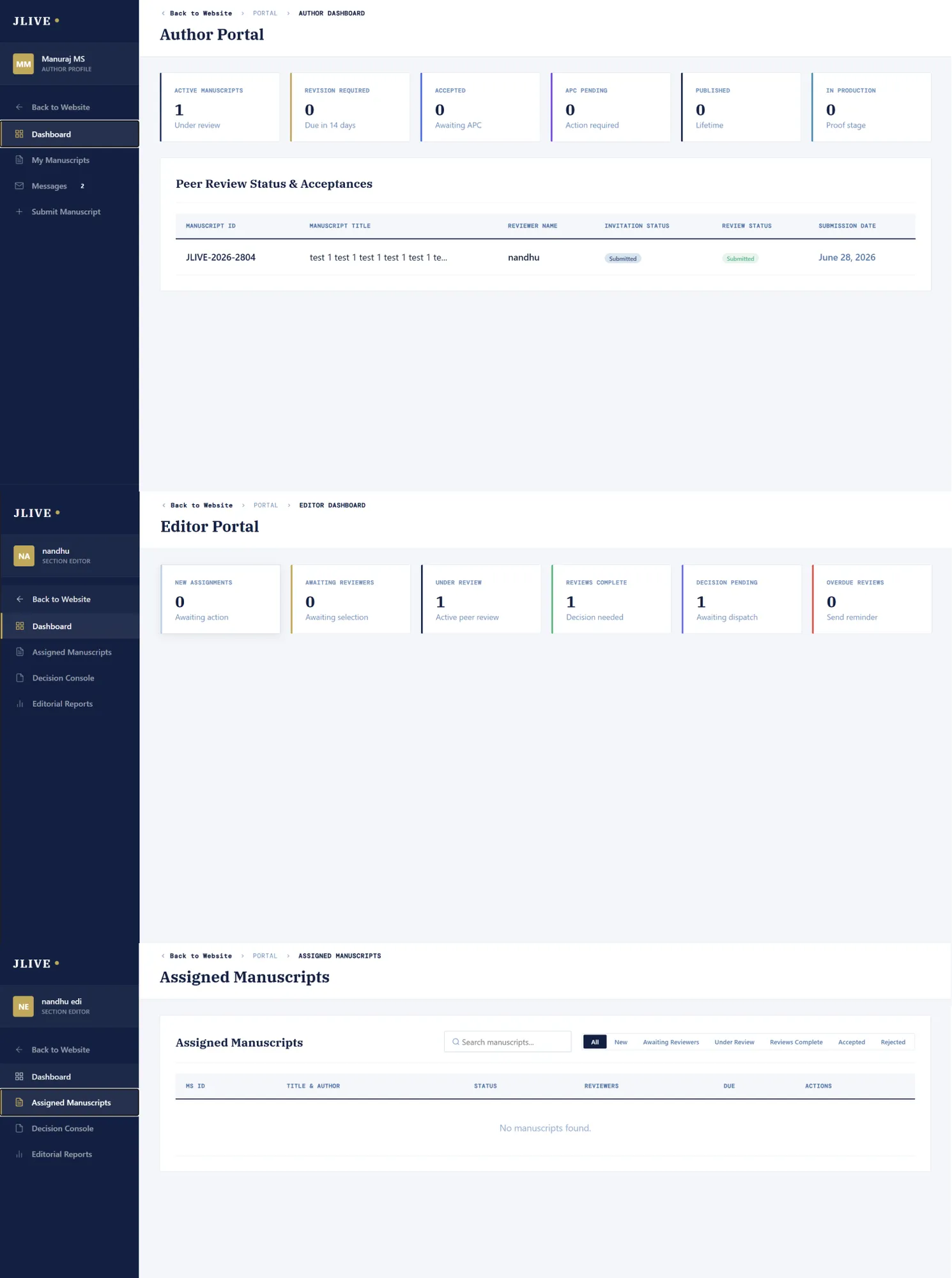
By studying established publication workflows, I created a proper, streamlined editorial pipeline that guides authors, editors, and peer reviewers from draft submission to final publication. The application is currently in its active building stage.
The Pain Points
Through early audit processes of existing scientific journals, several critical user pain points were identified:
• Poor Mobile Legibility: Academic journals often feature tiny font scales, multi-column paper PDFs that don't scale down, and lack responsive formatting.
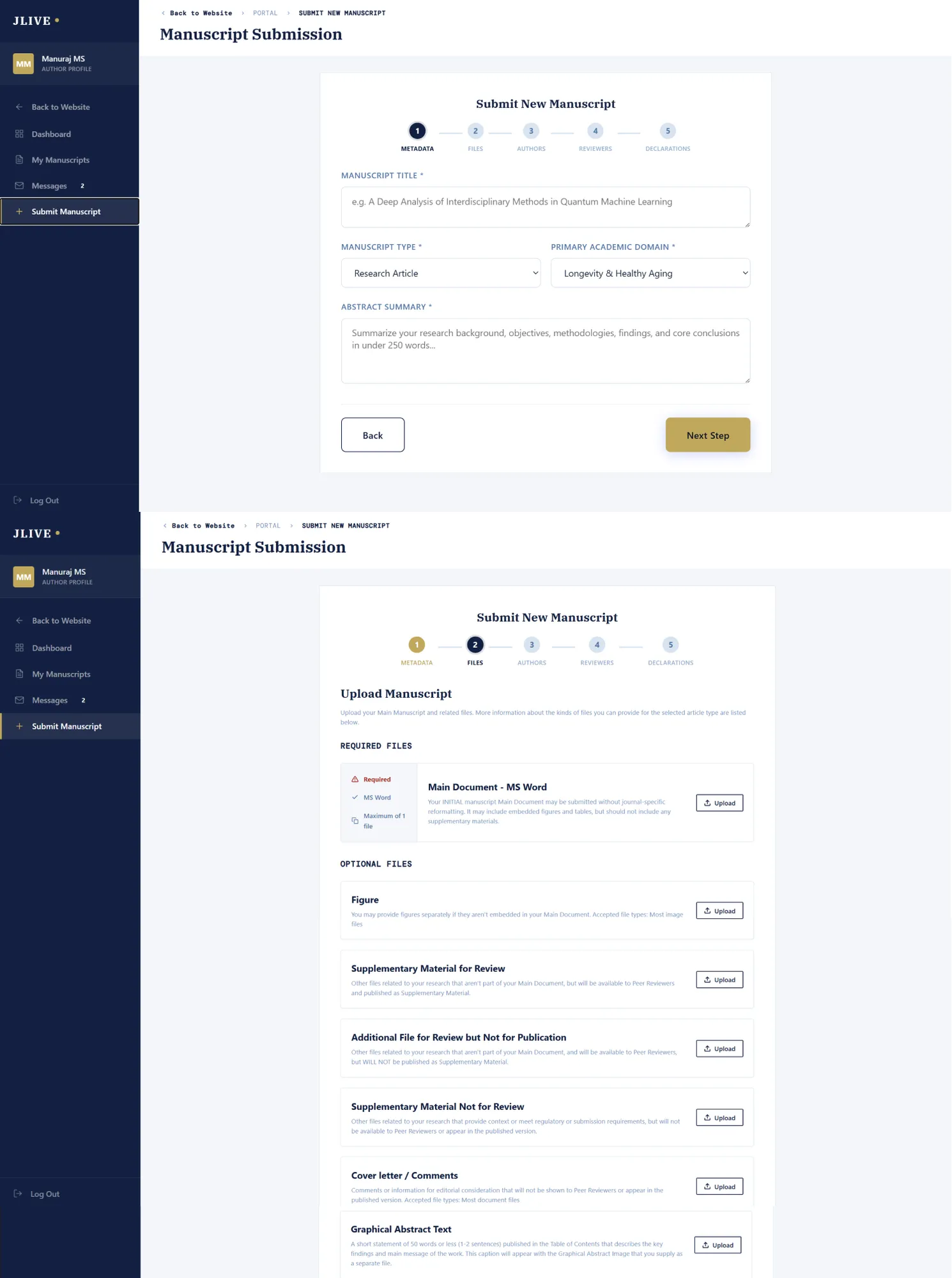
• High Submission Abandonment: Complex forms with dozens of nested fields and ambiguous file upload procedures lead to high abandonment rates by contributing authors.
• Outdated Navigation: Important sections like editorial board lists, aims & scope, and submission guides are often hidden under deep, multi-level dropdown menus.
Research Goals
The research phase was designed to address three primary objectives:
1. Determine the primary causes of submission drop-offs during the manuscript entry stage.
2. Understand the reading preferences of researchers (mobile screen skimming vs. deep desktop studying) to optimize typography scales.
3. Establish simple accessibility standards for complex mathematical formulas and medical charts across varying screen resolutions.
Research Methodologies
To achieve these goals, I executed a structured multi-method research plan:
• Competitive Audit: Analyzed the structures of IEEE journals, Science Magazine, and Aging to identify best practices and recurring UI layout patterns.
• Scholars Surveys: Conducted interviews and surveys with research scholars and medical authors to pinpoint friction points in their usual submission processes.
• Readability Viewport Testing: Audited visual hierarchies, line-height distributions, and table scales across multiple desktop, tablet, and mobile displays.
Key Features
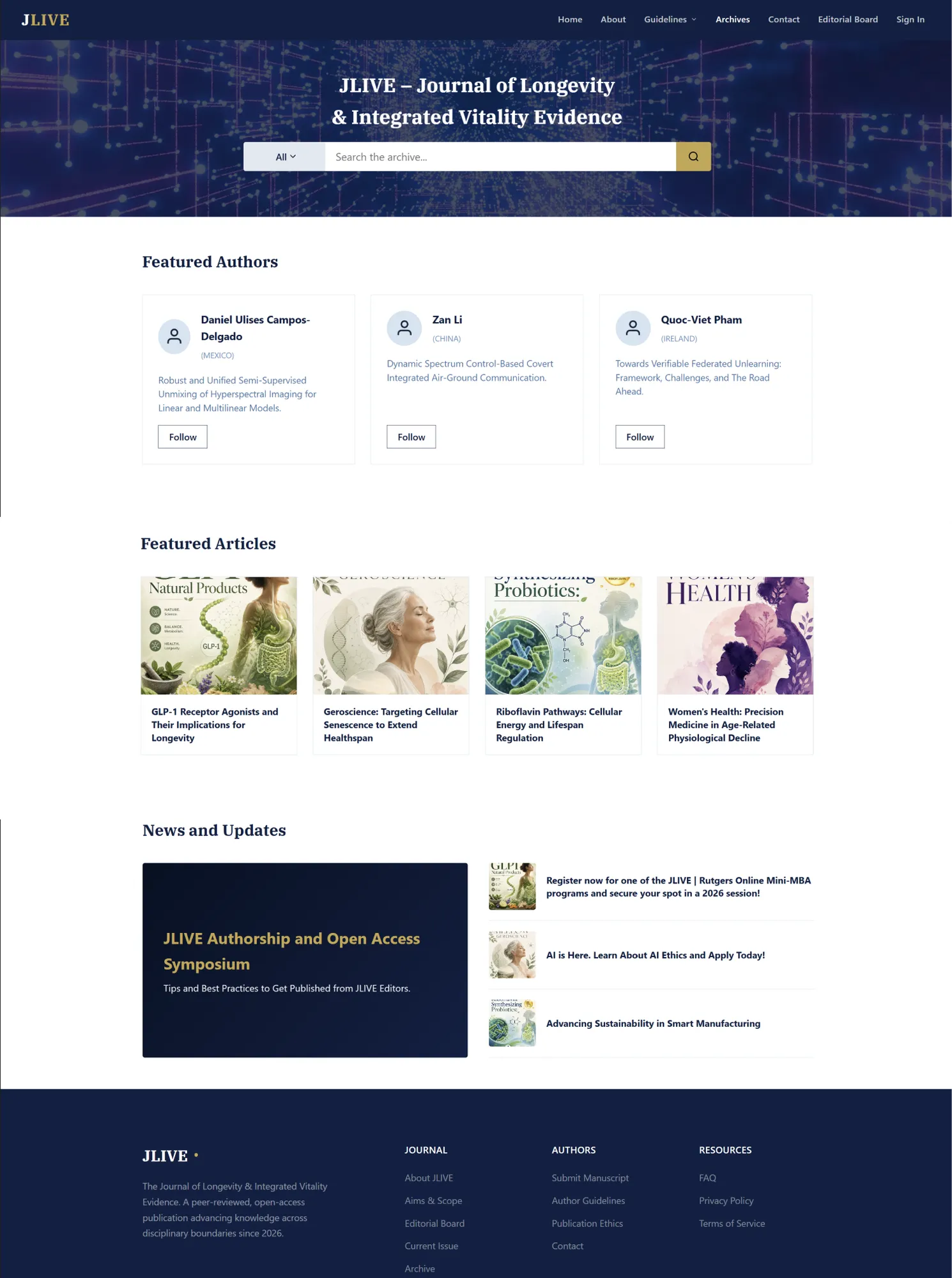
The design philosophy for JLIVE centers around ease of use, speed, and modern minimalism. The core features include:
• Mobile & Desktop Friendly Design: Complete multi-device support ensuring researchers and editors can read, review, and manage drafts seamlessly on the go.
• Easy Accessibility: Restrained color contrast, clean hierarchy, and screen-reader friendly design to make academic findings accessible to everyone.
• Minimal & Modern UI: Clean layout, generous white space, and zero unnecessary visual clutter to let the research speak for itself.
• Enhanced User Experience: Intuitively structured dashboards that minimize clicks and prevent common submission errors.
Navigation Bar for Easy Navigation


What Makes This Design Stand Out?
Unlike generic scientific journal websites that rely on outdated, cluttered, and complex user interfaces, JLIVE stands out with a refreshing design approach. Most academic hubs are hard to navigate on mobile and overwhelm readers with wall-to-wall text.
JLIVE delivers full mobile compatibility, frictionless navigation paths, and a premium editorial layout that matches modern web standards. By optimizing layouts and introducing clear workflow tracking, JLIVE elevates the academic publishing experience.